
What You'll Learn
- Distinct roles of the organic inspector and the certifier
- The value of a collaborative mindset to your inspection
- Components of an organic facility tour
- Required elements of an inspection including a facility tour, traceability audit, and mass-balance audit
Every certified organic operation must undergo an annual on-site inspection to verify compliance with the USDA organic regulations.1 Inspection is a key part of the system that verifies organic integrity from farm to fork. Your first organic inspection will be a learning opportunity where your daily practices and recordkeeping system are verified against your Organic System Plan (OSP). The inspector may find things that you can change. This is okay – consider it an opportunity to improve your system.
Role of the Inspector
In organic certification, the role of the inspector is to observe and verify the practices that are in place at your operation. This is a narrower role than an inspector holds in other audit programs, such as food safety, where they also score performance and issue a determination in their report. In organic certification, that determination is reserved for the certifying agent, not the inspector.
The organic inspector’s task is to physically observe your facility, test your records, and review the implementation of your OSP. They document any observed discrepancies or issues of concern in a report that they submit to your certifier. The certifier reviews the inspector’s report and makes the certification decision.
The organic inspector is truly an observer. We’re just there to identify those discrepancies between the written plan that you submitted and what they’re seeing on site. We don’t make any [certification] decisions…
Adopt a Collaborative Mindset
For most handlers, their first inspection is a stressful experience. They don’t know what to expect, and they think they have to be perfect. The good news is that the handler-inspector relationship is not adversarial. The inspector is there to observe, test, and verify your records, not to pass judgment or to scold. The inspection is your opportunity to showcase your systems, clarify any nuances that may be lost or confused within your OSP forms, and to identify ways that your processes and systems can continually improve. When everyone involved, from the inspector to you as the handler, is committed to upholding organic integrity, the inspection goes smoothly.
The goal of the inspection is to verify the systems that you already have in place … If there is a finding, that’s just something that can make you better. That’s just an opportunity to improve the systems you have in place, and it took fresh eyes to find that … It will ultimately make your organic system plan stronger
[The inspector is] not really the police. They’re not looking to make you fail. They’re looking for things that you might’ve missed … things that you could do better, and they work with you to improve and make a more complete and … impenetrable sort of shield of organic compliance.
Setting the Stage
Your inspector will contact you to schedule a day and time for your inspection. Make sure everyone necessary to answer the inspector’s questions is available on-site that day. The inspector may offer you some options for the date and time of your appointment, but it is important to be flexible and accommodating to the inspector’s availability. They may be traveling a long distance and may try to schedule your inspection for the same day and time as a nearby inspection to save you on inspection fees.
Prior to the inspection appointment, the inspector will review your OSP and any notes left by the certifier. They will identify any specific parts of your operation that are higher risk that they will want to pay special attention to during the inspection.
When the inspector arrives at your location, they will introduce themselves, making it clear that they are affiliated with the certifier they are representing. The inspection typically begins with an opening meeting where the inspector reviews the day’s agenda with you, describes the types of documents they’ll want to see, and addresses any logistical challenges or personnel availability needs. The inspector will also explain that they are there to make observations of your compliance with the USDA organic regulations, not to make any decisions regarding your certification.
Once the logistics are handled, the inspection will begin. The order that the inspector progresses through the elements of the inspection will be tailored to your particular operation’s setup and the inspector’s preferences.
Facility Tour
A large portion of every inspection is dedicated to a tour of your facility. This is where the inspector observes how you implement your OSP in your physical space. Not every handler has a facility, though. In the case of a trader, broker, or importer who doesn’t take physical possession of organic product, the facility tour is skipped, and the inspection moves directly into the records audit portion.
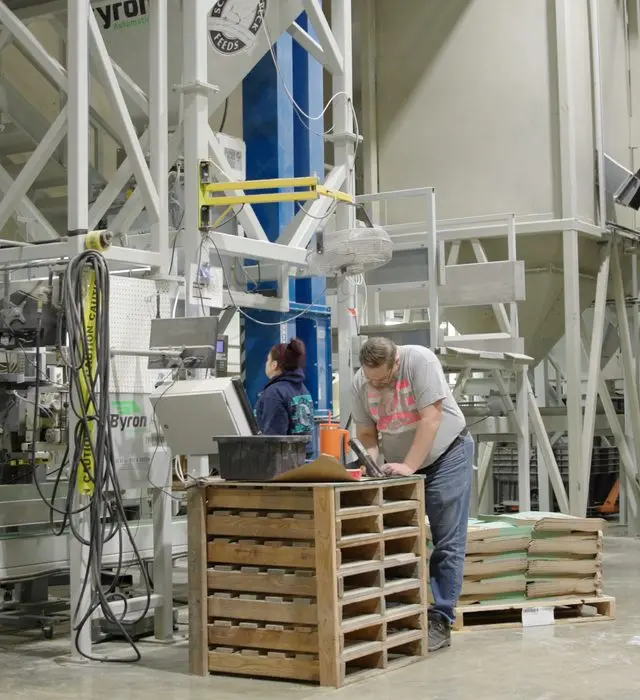
During the facility tour, the inspector will walk your production lines, receiving docks, and storage areas to verify that the daily practices observed on the facility floor accurately reflect what is written in your OSP.2 They will visually confirm that you are protecting organic ingredients from commingling, observing practices like physical barriers, dedicated organic storage areas, and clear signage separating organic from nonorganic goods (as applicable).
The inspector will thoroughly review all high-risk areas for prevention of contamination by prohibited substances, like sanitation practices, equipment clean-outs, and pest control methods. If applicable, they will verify that shared equipment is properly cleaned and/or purged between conventional and organic runs, and that no prohibited substances are contaminating organic products.
The inspector will verify that the day-to-day activities follow your OSP, and will also identify any compliance issues that need to be remedied.
Records Audit
The organic seal is backed by traceability, and the USDA organic regulations require detailed recordkeeping to document organic compliance from purchase, through processing, to sale. A significant portion of your inspection will be dedicated to a thorough review of your records.
Reviewing Records for Completeness and Accuracy
The inspector will review all sections of your OSP,3 asking for records and logs to connect what happened on the ground with what’s written in the plan.4 Be prepared to review and outline any changes you have made since submitting forms and documents to your certifier. This includes providing updates to facility maps, product profiles, ingredients, equipment changes, product flow descriptions, and suppliers.2 Ideally, all updates to your operation are submitted to your certifier prior to inspection so that your inspector is able to spend their time verifying the new information. That said, it is common for minor changes to be reported to the inspector at the inspection. Remember, your OSP is a living document that grows and changes with your operation, and is continually updated.
During the inspection, the inspector might identify gaps in your OSP, documentation, practices, or in all three. That is not unusual, especially for a first inspection. Treat it as a learning opportunity; someone is identifying how you can get better at organic compliance. Any issues will be clearly communicated to you, and you will have the opportunity to address them.
Traceback Audit
One of the goals of organic recordkeeping is tracking products from the farm to the fork. As a handler, you are responsible for holding your link in that chain secure. Your records must prove an unbroken chain from the sale of your finished product all the way back to the organic operation(s) that you sourced organic ingredients from.4 This ensures that every ingredient used in an organic product has a verified origin. If your operation does not process products, or if you do not physically handle products, your records should clearly link back to the last certified operation that you sourced from.
During the inspection, at least one finished product will be chosen to test the traceability of your records system. The inspector will follow that product from final sale, backward through every step of the handling process, checking that each step is linked in a traceable way and that every step is accounted for. This is also commonly called the “traceback audit” in the industry.
Mass-Balance Audit
Another method that the inspector will use to test your processes and records is to balance the ingredients coming in to your facility with the product going out over a set timeframe.2 There should be a perfect balance between the quantity of organic ingredients that you purchased, and the quantity of product that you sold (with any loss or shrink during handling and processing). This balance is necessary to demonstrate that the quantity of ingredients purchased account for the quantity of products sold or shipped. The mass-balance audit is a tool for detecting potential fraud within the operation. If production exceeds what was possible with recorded organic ingredients, that indicates either fraud or a recordkeeping issue.
Residue Sampling and Testing
The inspector may collect samples of your ingredients or products for residue testing.2,5 These tests check for prohibited substances, like pesticide residues, and excluded methods, like genetic engineering. These tests may be ordered by the certifier in response to risks that they have identified, or as part of routine surveillance. Certifiers are required to conduct residue testing on 5 percent of their operations annually, so at any time your operation could be subject to residue testing. The inspector may collect a sample at their own discretion in response to conditions they observe during the inspection. If samples are taken, the inspector will provide a receipt and all test results will be made available to you by the certifier.6
Exit Interview
Once the facility tour and records audit are complete, the inspection finishes with an exit interview.7 At this time, the inspector may provide you with a summary sheet documenting their observations. These may include “issues of concern,” updates made during the inspection, and missing information the certifier still needs to address. This is your opportunity to clarify any misunderstandings and provide any additional context or documentation before the inspector writes their final report and submits it to the certifier. The inspector may ask you to sign the summary sheet, and will leave a copy of it behind for your records. And with that, the inspection is complete and the inspector will leave your facility.
Conclusion
The inspection is, at its core, a chance to show your work. You’ve built systems, trained your staff, and maintained your records, and the inspection is the moment when all of that gets verified by someone with fresh eyes. Most handlers find that after their first inspection, the process feels a lot less intimidating. You learn what the inspector is actually looking for, you see where your records hold up and where they can be tightened, and you leave with a clearer picture of your own operation. Go in prepared, stay open to feedback, and treat it as part of the ongoing practice of organic compliance rather than a one-time hurdle to clear.