What You'll Learn
- How a high-volume produce distributor maintains organic integrity from receiving to shipping.
- How traceability from warehouse to farm is maintained through a lot number system.
- Why the mass-balance audit is so critical.
- How template-based SOPs can cut down on label submissions to your certifier.
- How to prepare for an inspection by practicing traceback and mass-balance exercises.
Watch Time: 13:31
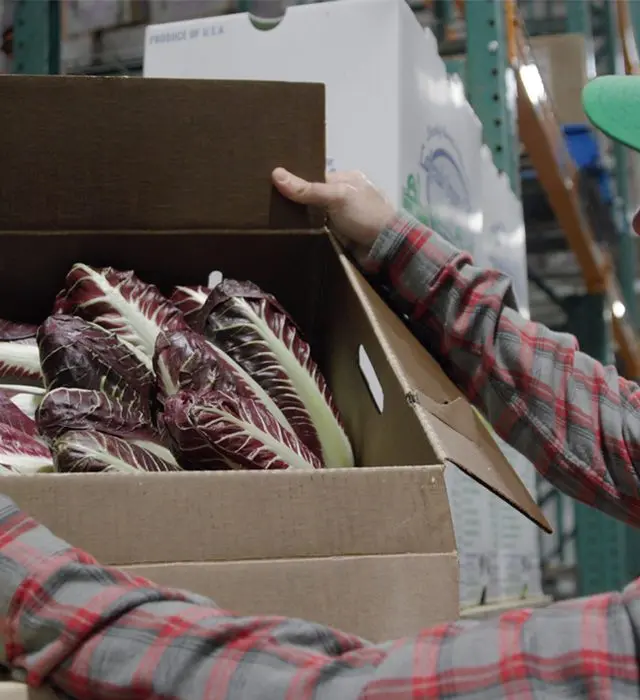
This video profiles Organically Grown Company, or OGC, a certified organic produce wholesaler and distributor in the Pacific Northwest that has been receiving and shipping organic produce daily since 1978. Founded to support local organic growers, the company distributes to restaurants, retailers, buying clubs, and processors, and the video uses a walk through their warehouse to show how organic integrity is maintained across a high-volume, fast-moving produce operation. The recurring theme from staff is that compliance and food safety are woven into the company’s culture rather than treated as an add-on.
The heart of the video is traceability. Receiving checks each load against the purchase order for labeling compliance, and every pallet gets a lot-coded sticker whose barcode matches the warehouse management system, preserving traceability back to the supplier and even the farm. The most critical document is the repack sheet, which captures the exact in-out balance whenever product is relabeled or rebranded, tracking every pound that is handled. Cleaning and sanitation follow a master sanitation schedule using organic-approved products, with tables cleaned before moving to any product consumed raw. Compliance specialist Amanda James-Martin demonstrates a full traceback, following trumpet mushrooms from a sales order back through the invoice to receiving, and confirming in their document system that the vendor was actually certified to sell that item.
The video also offers practical guidance on labeling, recordkeeping, and inspections. Rather than submitting every label to the certifier for review, OGC worked with its certifier to build template-based Standard Operating Procedures (SOPs) for non-retail and PLU sticker labels, so the base label is approved and only the item and lot numbers change. Their recordkeeping has evolved from folders and an unwieldy Excel sheet into a dedicated software system, and the honest takeaway is that your first system probably won’t be your last. OGC sees inspectors as partners rather than enemies, and an inspection finding as an opportunity to improve. Preparation, especially practicing mass balance and traceback exercises, is what makes inspections go smoothly. The closing encouragement is that an Organic System Plan is no harder than a food safety plan, and the extra recordkeeping required for organic certification shouldn’t hold anyone back who believes in organic.
About the Featured Operation
Organically Grown Company
- Organic Produce Wholesaler & Distributor
- Portland, OR
- 260 Employees
- Certified Organic since 1998
An organic produce wholesaler and distributor sourcing certified organic fruits and vegetables domestically and internationally for retailers, restaurants, buying clubs, and processors. At its core a logistics operation, it also sorts, repacks, co-packs, and private-labels. Founded to support local organic growers, it is now purpose-trust owned, serving a mission rather than profit and committed to advancing organic.