
What You'll Learn
- Distinguish dry and wet cleaning methods and when each applies
- Run a purge that prevents commingling and prove it works
- Verify equipment is clean using visual checks, ATP swabs, and residue tests
- Work with your certifier to approve cleaning methods and materials
- Keep the cleaning and purge records your inspector will expect
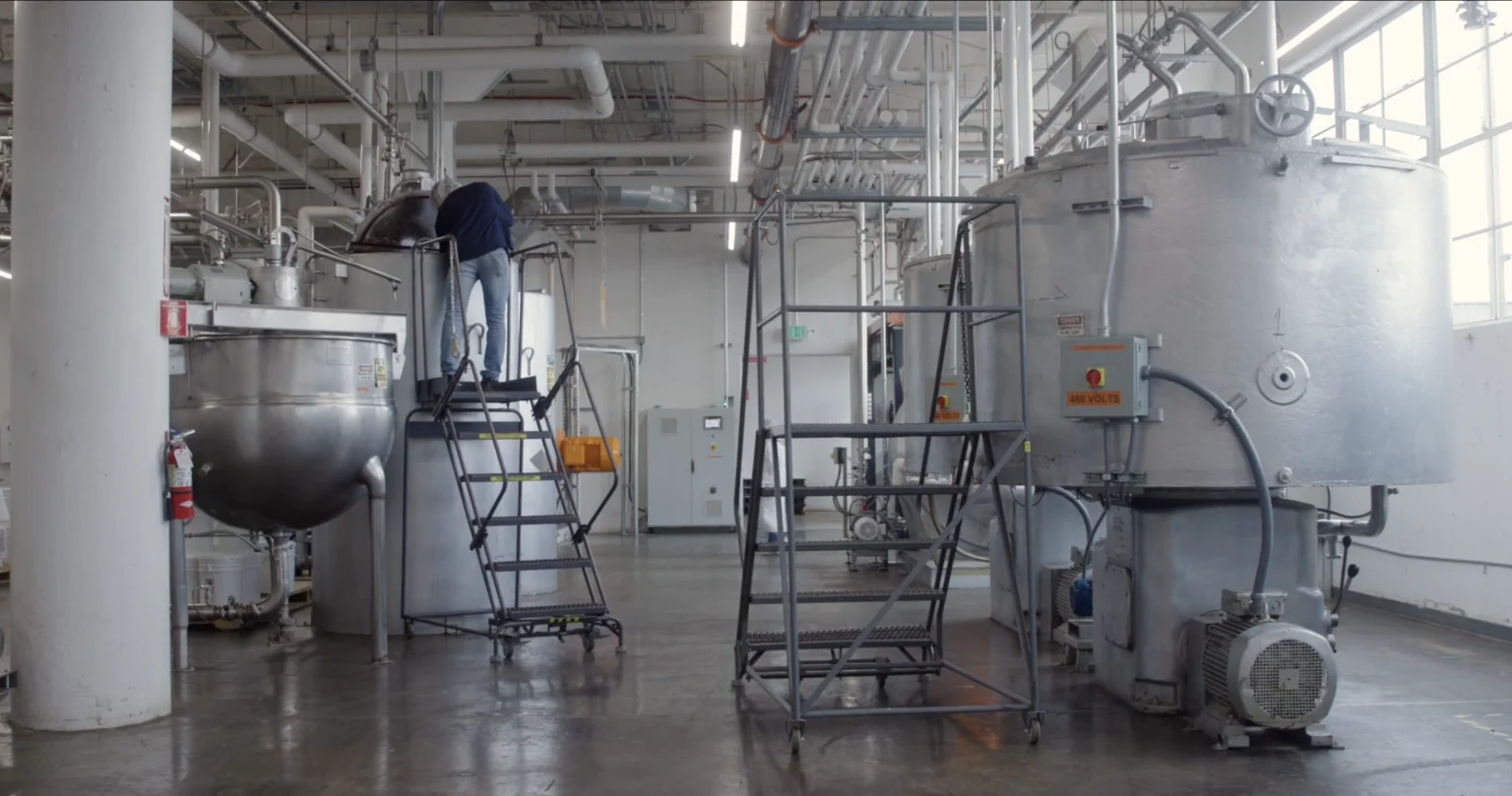
Food safety is top of mind for every handler and processor. Effective food safety measures range from screening nonfood matter out of raw commodities to sanitizing surfaces against microbial contamination. But for organic handlers, the considerations don’t end there. Many organic handlers operate in facilities that run both organic and nonorganic products and ingredients through shared equipment. This introduces another vector of contamination that equipment cleaning must guard against. An effective cleaning procedure removes all residues of nonorganic product, as well as any cleaners and sanitizers that would contaminate organic products.1 Equipment cleaning is one of the most important control points for both food safety and organic compliance.
Organic handlers rely on two broad families of cleaning, and which one you use depends on the machine and the process. Dry methods remove residue physically, without liquid. Wet methods use water and cleaning chemicals. Many facilities use both, sometimes on the same piece of equipment.
Dry Cleaning
Dry cleaning covers any physical method that removes residue without introducing liquid, including vacuuming, wiping, scraping, scrubbing, sweeping, compressed air, and purging. It is common on equipment where water causes problems, such as flour mills and other dry-ingredient processes where moisture leads to buildup or spoilage. A dry cleaning program often combines several of these methods.
Scratch and Peck is an organic livestock feed mill that uses dry cleaning methods. “Our sanitation program is based upon a dry program. We do a lot of vacuuming. We do a lot of sweeping, we do a lot of cleaning up. We do a lot of flushing. We do a lot of purging.… We have a clean-in-place mill here, as in we can’t take it apart. So we have to maintain the integrity of the inside of our mill.”
Tracey Vanfield
OPS Director
Scratch and Peck
Purging
A purge clears residue from inside a machine by running material through it until the previous product is gone. Purges use organic product or materials allowed in organic processing to push out the nonorganic residue that came before it. Whatever you run through touches that residue, so it is no longer organic once it exits, and must be discarded or diverted to nonorganic use.1 A purge needs to use a sufficient quantity of product to remove all nonorganic residue from inside a machine. It is up to you to develop your own purge protocol, tailored to your specific equipment and product. Your certifier will ask you to show how the amount of purge material that you run through prevents commingling. For every purge cleaning, you must document how much purge material was used and what was done with the purge material afterward.
Wet Cleaning
Wet cleaning uses water on its own or combined with cleaners, acids, alkalis, enzymes, or sanitizers. It can be as simple as wiping down a surface with sanitizer or it may involve several flushes of different cleaners. Whatever you use, the cleaners and sanitizers used must be approved by your certifier. Your certifier will look hardest at the last step of your cleaning process, typically your sanitizer, because that is what touches the surface just before your organic product does.2 The risk of contamination depends on the type of wet cleaning.
Clean-In-Place (CIP)
Clean-in-place (CIP) is an automated method for equipment that runs liquids through your equipment, such as the tanks and lines in milk processing. Rather than taking anything apart, you circulate water and cleaning chemicals through the equipment to clear residue and keep pathogens from growing. The exact sequence depends on your product and machinery, but a typical run starts with a water pre-rinse, moves to a caustic wash that breaks down residue, and follows with a rinse. Where limescale builds up, an acid wash and another rinse come next. The cycle finishes with a sanitizer, sometimes followed by a final water rinse.
Clean Out of Place (COP)
For solid food products, the machinery is often disassembled so that the parts can be individually cleaned. After disassembly, the individual parts may be cleaned manually or in a dishwasher. If a dishwasher is used, any potential residues from rinse aids need to be considered and discussed with your certifier. An example of equipment that’s commonly cleaned out of place is a meat grinder. The machine is disassembled and the individual components (like plates, blades, and augers) are cleaned and sanitized.
Steam
If steam is used for cleaning directly on surfaces that will contact organic products, any steam additives such as boiler chemicals need to be considered carefully. Your certifier will ask what boiler chemicals you use and how, to judge whether they could reach your organic product. Protecting Organic Products During Processing and Work-in-Progress covers water, steam, and boiler chemicals in more depth.
Water
Water used to clean organic-contact equipment may prompt your certifier to ask for a water test, depending on your source. Municipal water is highly regulated, so certifiers rarely test it, but a private source is more likely to need verification.
Porous and Nonporous Surfaces
How well any equipment cleaning method works depends on what the surface is made of. Nonporous materials like stainless steel or glass do not absorb product, cleaners, or sanitizers, so they clean up reliably and can be used across organic and nonorganic runs once they are washed and sanitized. Sealed food-grade plastics may also be sufficiently cleanable. Porous materials like untreated wood, cardboard, paper, and burlap trap residue and contaminants in their fibers, which makes them very hard to clean effectively. A porous surface that has held nonorganic product generally should not be used for organic product unless a nonporous barrier, such as a disposable plastic liner, sits between the two.1,3
Container Reusability Between Organic and Nonorganic Products
Verifying Equipment Is Clean
Choosing cleaning methods that actually prevent contamination and commingling is your responsibility,1 and so is showing your certifier that they work. How you confirm a machine is clean depends on the equipment and the process, but a few checks are common.
- Visual Check: If you can see residue, the equipment is not clean.
- ATP Swab: ATP, adenosine triphosphate, is a molecule that is present in all living things. A positive ATP swab means organic material is still on the surface and the cleaning was not complete. ATP testing is not required for organic certification, but it is a useful way to confirm your cleaning is working.
- Residue Testing: After cleaning, you can test for the presence of the cleaning/sanitizing materials, to ensure there is no prohibited sanitizer residue that would contact organic product. Your certifier may require this if you use quaternary ammonia sanitizers, which are designed to leave a lasting antimicrobial residue. While a food safety manager may value this residue, it isn’t allowed to be in contact with organic products. In organic processing, residue from quaternary ammonia sanitizers is prohibited and cannot touch organic product.1,4,5
- Purge Effectiveness: There are a few ways to confirm the effectiveness of a purge. You can ask the equipment manufacturer how much product makes a sufficient purge. You can work it out yourself through measurements and some experimentation. And you can choose a purge material that looks distinct from your product, so you can see when the machine runs clean. Whatever purging method you use, you need to determine with confidence that the purge prevents commingling between organic and nonorganic products, and convince your certifier of the same.
Part of the compliance is being able to explain … how did you determine how to purge, because the inspectors won’t tell you if what you’re doing is correct or how to do it. So we’ve contacted manufacturers before and got some assistance. Other times we were told that they didn’t want to give us direction, so in instances like that, through our own weights and measures, we were able to determine how we would run a purge.… We’re not scientists, but we explained our methods to the inspector and the certifier, and they agreed with it.
Working with Your Certifier
Your certifier cannot tell you how to clean your equipment. Their role is to review the methods and materials you propose and confirm that they prevent contamination and commingling. Your inspector then checks your cleaning and sanitation records against what your OSP says you do.6 Keep the conversation going year-round rather than only before your annual inspection, and be sure to report any changes to your certifier. Remember that while your certifier knows the organic regulations, they are not necessarily an expert in your specific process or in food safety, so you may need to provide information to help them understand your approach.
Building Cleaning Protocols Into Your Operation
Cleaning takes time, and cleaning before an organic run can add steps like purging or a switch to different cleaners and sanitizers. Schedule enough time so these do not stall production. Many handlers run their cleanouts at the end of the day before an organic run scheduled the next morning for exactly this reason.
Your staff perform these cleanouts, so train them on how to do it right before an organic run, and document that training. Pair verbal instruction with written and visual guides, since people learn differently and reminders help.
Different machines and processes are easier or harder to clean. If you work with others at your company to think through the cleaning process as you are designing your facility and choosing machines, you approach it through an organic lens, and avoid machines and processes that are harder to clean. In addition to making your job easier by reducing risk of contamination or commingling, this will also reduce food safety risks.
Documenting Your Cleaning and Sanitation
Organic handlers are required to document equipment cleaning, and good records do double duty by guiding your staff and proving to your inspector that the cleaning happened.9 Checklists, logs, and sign-offs all serve both purposes. Which records apply depends on your process.
For the plans themselves, your OSP describes your cleaning and sanitation procedures,7 and many handlers attach standard operating procedures (SOPs) for specific areas or pieces of equipment. Alongside the plans, you keep logs of what actually happened. Cleaning logs track the machines, containers, and storage areas that touch organic product, noting the materials used and where. If purging is part of your process, purge records note when you purged, how much, and what became of the purged material. Employee training logs record when staff were trained on the procedures. Where you do residue testing after a last-step sanitizer, those results must also be documented.
Cleaning and sanitation records commonly include:
- Who does the cleaning and sanitation, whether in-house, a contractor, or both
- The cleaning and sanitation steps performed before organic processing, in shared facilities
- Purging procedures, including quantity, where the material goes, and what you document
- Measures that prevent contamination and commingling
- Any residue testing you perform
- How sanitation is monitored, and how often
- Which cleaning and sanitation records you keep, and where cleaning materials are stored
Conclusion
Effective equipment cleaning comes down to removing everything the previous run left behind, including the cleaners and sanitizers that can’t contact organic product, and being able to show your certifier how you know it worked. Match your methods to your equipment, verify them, keep the records, and review any change with your certifier before you make it.