What You'll Learn
- How an organic grain farm grew into a stone mill doing millions in sales.
- Why box-level lot codes let you trace a retail bag back to the farm lot.
- What to confirm before buying grain, from organic certificates to security seals.
- What a full traceback looks like, from finished package back through milling to source.
- How moving from paper to an ERP system can reduce error and tighten traceability.
Watch Time: 11:32
This video profiles Janie’s Mill, an organic stone mill in Illinois that grew out of Harold Wilken’s organic grain farm. Wilken converted his 700 acres to organic in 2005 after growing disillusioned with what conventional farming was doing to his soil, and when a chance came in 2013 to build a mill, he brought in Jill Brockman-Cummings to run it because she shared his commitment to organic. The mill scaled dramatically when the pandemic shifted it from mostly wholesale to a flood of retail orders, hitting 568 orders in a single day after national press coverage, and it now does more than three million dollars in sales. The story is a strong example of building an organic grain handling operation from the ground up.
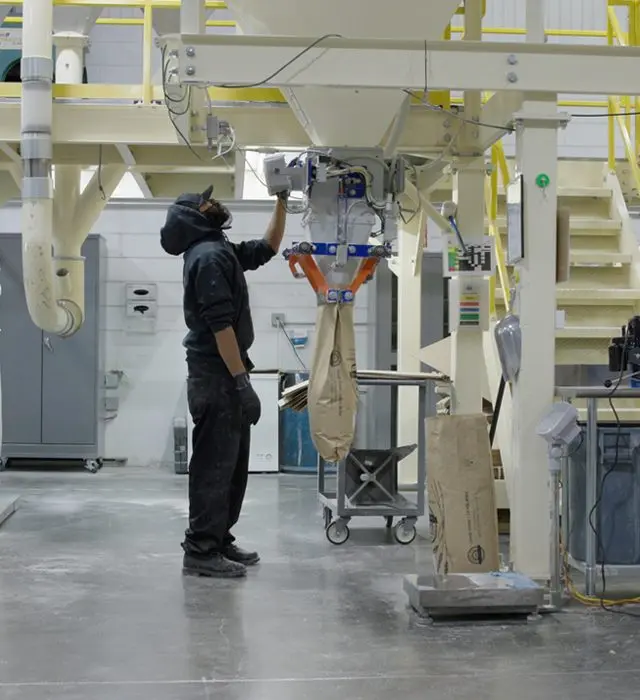
Organic compliance is rooted in traceability, from receiving all the way to the retail bag. Incoming grain arrives in hopper trucks or totes and is transferred to labeled Pro Boxes marked with the grain type, farm lot number, and net weight, and each box gets its own lot code that carries through milling, re-bagging, and sale. Before buying any grain, the mill confirms a current organic certificate is on hand, and grain from outside farms must arrive with security seals on the truck or totes. Because everything they mill is certified organic, the process stays simple, but the discipline is in the documentation. Millers record box lots at production, track the organic bran separately, and match the lot on each finished bag to its source. Brockman-Cummings demonstrates a full traceback on a bag of semolina flour, following it from the retail package back through the milling date and mill number to the specific farm lot of durum wheat. The operation has moved off paper binders and spreadsheets into a single ERP system, which tracks everything more precisely and cuts the human error that came with the old approach.
The video also walks through what an inspection looks like. Inspections start with a walkthrough where the inspector notes labeling, storage, and cleanliness, then moves to the office for questions about products, suppliers, pest management, and sanitation before delving into traceability. Brockman-Cummings is reassuring that inspectors are not scary, that confidence builds year over year, and that the guiding rule is simple: if you ever wonder whether to write something down, write it down. Her practical advice covers sourcing only organic grain, getting every material and every label approved by the certifier, and understanding that organic commands a higher price the consumer will pay once they see the value. For Wilken, the health of the soil and people is paramount and the mill is proof that organic can feed people and sustain a community, with 40 jobs now tied to the farm and mill.
About the Featured Operation
Janie’s Mill
- Organic Stone-milled Flour
- Ashkum, IL
- 28 Employees
- Certified Organic since 2017
A stone mill producing flours from grain grown on partner farms and its own fields, with quality as its stated first priority. It sells wholesale to bakeries and retail to home bakers. The operation grew from a farming family’s interest in connecting good growers, careful milling, and bakers who value the resulting product.