
What You'll Learn
- How certification follows handling, not ownership of the brand
- The compliance responsibilities for when a brand owner is certified and when it is not
- Compliance considerations that define every co-packing relationship
- Label approval when the co-packer and brand owner have different certifiers
- Effectively connecting the audit trail across the two operations
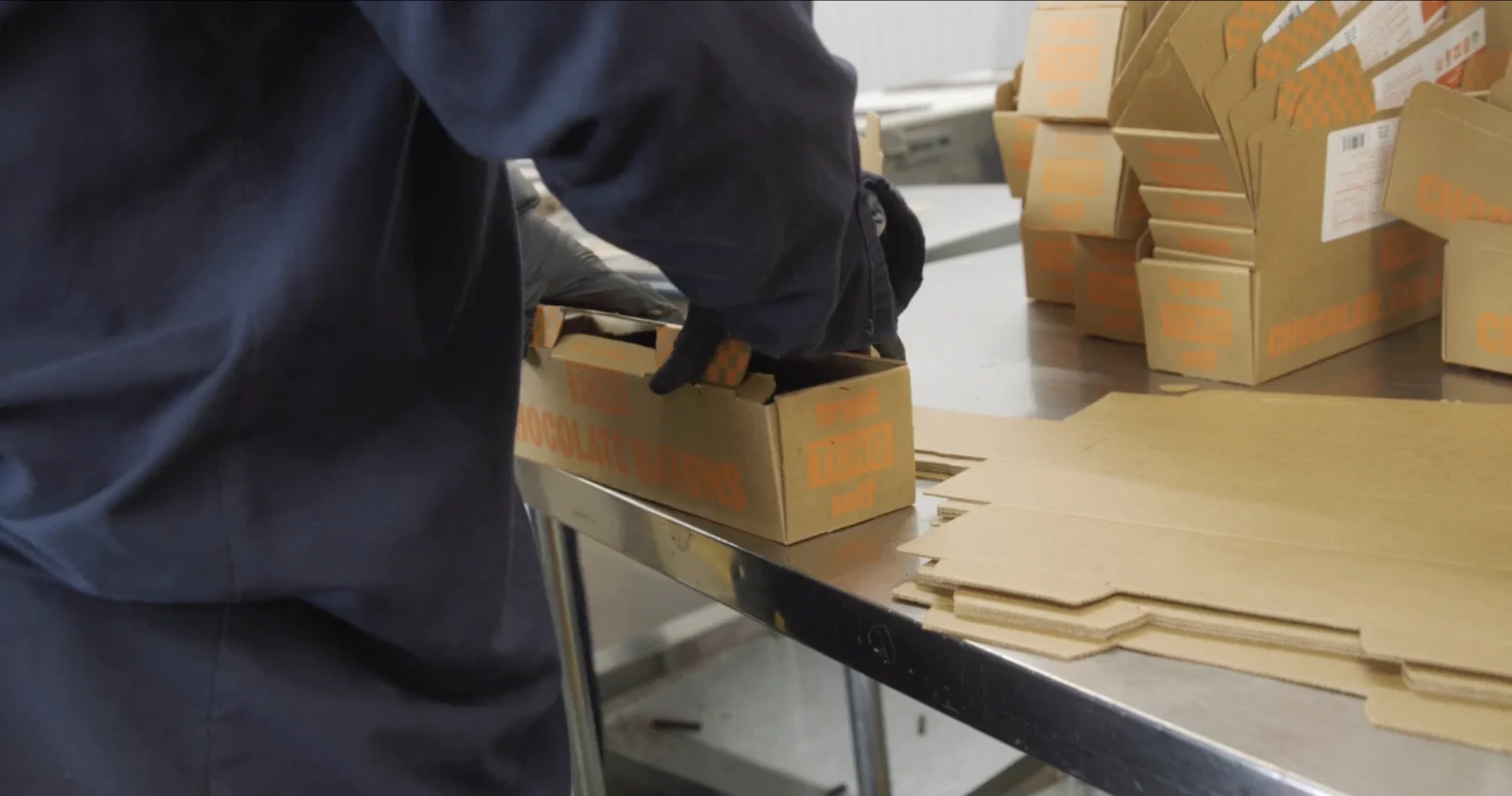
A co-packer or co-manufacturer is a facility that processes, manufactures, or packages products for a brand that does not own the facility.1 The services can include sourcing ingredients, formulating the product, processing, packaging, and labeling. It is one of the most common arrangements in organic food, and the same company can sit on either side of it, acting as a brand owner in one relationship and a co-packer in another. For the purposes of this article, we will refer to both co-packing and co-manufacturing as “co-packing.”
Organic certification is based on who handles the product, not on who owns it or whose brand is on the label.2,3 Any facility that physically handles, processes, packages, or labels organic products, and does not meet an exemption, must be certified,2 even if it never takes ownership, never sells under its own name, and makes the product entirely to someone else’s specification.
The Brand Owner May Be Exempt from Certification
A brand owner that contracts with a certified co-packer, and only receives, stores, and sells the finished product in sealed, tamper-evident retail packaging, may qualify for exemption from certification.4 This is a common private-label arrangement. In it, the branded product name appears on the front of the label but the co-packer is the certified operation responsible for all production compliance, and they may be listed on the information panel of the product label. Visit Labeling Requirements for Products Intended for Human Use for more details on product labels.
A brand owner is not exempt from certification if they do more than receive, store, and ship. If the brand owner purchases ingredients for the co-packer, the brand owner must be certified, because purchasing organic ingredients is itself a form of handling.5 Additionally, if it repackages, relabels, or opens the finished product in any way, it must be certified. Consider a food entrepreneur who launches an organic snack line. They contract a certified co-packer, own the recipe, and never touch the finished bags, which ship straight from the co-packer to retail. As long as the bags are sealed retail packaging and the brand owner takes no further handling action, the brand owner does not need to be certified. But suppose that same brand owner also buys the ingredients and has them delivered to the co-packer. That one act, purchasing nonretail organic ingredients, requires the brand owner to be certified.
Both parties document the arrangement. The co-packer’s Organic System Plan (OSP) must list its private-label arrangements, and a certified brand owner must list its co-packers in its OSP and attach each co-packer’s organic certificate.8 Many certifiers require a Private Label Arrangement form to capture the details of the relationship when a co-packer produces under a brand owner’s label.
Dividing the Compliance Responsibilities
Certification responsibilities must be properly divided between the brand owner and co-packer. Working through them at the outset keeps problems from surfacing later at an inspection.9 The table below describes the division of responsibilities for each certification compliance area between the parties: certified brand owner, uncertified (exempt) brand owner, and the co-packer.
| Compliance Area | Certified Brand Owner | Uncertified Brand Owner (exempt) | Co-packer |
|---|---|---|---|
|
Certification of the production facility |
N/A |
N/A – Relies on the co-packer’s certification |
Required – Must always be certified |
|
Co-packer certificate on file |
Must maintain the co-packer’s certificate listing the specific branded products |
Must obtain and keep the co-packer’s certificate for its products10 |
Maintains its own certificate |
|
Product formulation approval |
Not required unless the certifier requests it |
N/A |
Required – Approved by the co-packer’s certifier |
|
Ingredient sourcing and supplier certificates |
If they source the ingredients, the brand owner must keep supplier records |
Cannot source nonretail-packaged organic ingredients, since that would require certification |
Ingredients and supplier certificates must be listed on the co-packer’s supplier list |
|
Verifying ingredient compliance at receiving |
N/A | N/A |
Required – Must check that incoming ingredients are compliant before using them |
|
Production and batch records |
N/A | N/A |
Co-packer maintains |
|
Purchase, receipt, and sales records |
Must show how much was purchased, produced, received, and sold |
Must keep records showing organic products were organically handled and verifying quantities received and shipped or sold, for 3 years10 |
Maintains production and shipping records in all cases; Also maintains purchase records if sourcing ingredients |
|
Label pre-approval |
Submits labels to its certifier with a spec sheet or formula to confirm ingredients listed on labels |
N/A – The co-packer’s certifier approves. |
Must submit labels to its certifier for approval; always required because the co-packer applies the label to the product |
|
Description of the arrangement in an Organic System Plan (OSP) |
Required in the brand owner’s OSP, listing co-packers and attaching their certificate |
N/A – Does not maintain an OSP. |
Required in the co-packer’s OSP, listing private-label arrangements |
Co-Packer’s Compliance Obligations
The co-packer is fully responsible for what happens at its facility, whatever brand is on the product. Certification of a contracted facility applies only to the products it requests certification for like those produced for its certified clients, not to the whole facility or to everything made there.2 Within that scope, the co-packer is responsible for the organic production practices, the product formula, any nonorganic ingredients or processing aids, and the labels, for its own brand and for its clients’ brands. It is also common for a co-packer to run its own in-house brand, and the co-packer’s name sometimes appears on a client’s label as the certified entity on the information panel, as well.
A co-packer cannot rely on a client brand owner’s unverified assertion that ingredients are organic. If working with a certified brand owner, the brand owner may be able to provide this verification depending on who sources the ingredients. In all cases, the co-packer must be able to demonstrate and document the organic status of ingredients it handles and protect their integrity, through verification appropriate to its role.8,11
Label Approval
Organic labels make regulated claims, so they must be reviewed and approved by an accredited certifying agent before they are printed and placed in commerce,12,13 whether the label belongs to a brand owner or to a co-packer producing its own brand. Because the co-packer is the operation that physically applies the labels, the co-packer’s certifier always requires approval of them, and generally first before a brand owner’s certifier reviews them. For a multi-ingredient product, the co-packer’s certifier also needs the product formulation in order to verify the ingredient statement.
When the brand owner is certified by one certifier and the co-packer by another, adding a new product takes coordination between both certifiers.
- The co-packer’s certifier adds the product to the co-packer’s certificate first, which means approving the formulation, the suppliers, and the label.
- The brand owner’s certifier then approves the product for the brand owner’s certificate, which means approving the label and the co-packer.
- The retail label ends up approved by both certifiers.
Your certifier may have some requirements and the certifier of your co-packer could have different ones … What we do is try to help our co-packers achieve the requirements … Depending on the certifier, we get the forms, we fill them out, and we send them for the co-packer just to fill the gaps. We try to make things as easy as possible.
Approvals take time, and that is easy to underestimate. If a brand owner sends a label for a new product the day before the co-packer’s scheduled run, they likely will not receive the green light from their certifier in time for the run to proceed with all needed label approvals in place. Where speed to market matters, some operations plan around it. Some handlers work with their certifier to get a label template for simple single ingredient products approved in advance, so new products using the template do not each need a separate multi-week approval cycle.
Connecting the Audit Trail
For all certified products the records have to connect the finished product back to the source ingredients.14 In a co-packing relationship, certifiers stress that each side keeps its own portion of the records and the two stay distinct.
Brand Owner’s Records
For a brand owner who does not supply any ingredients or otherwise handle products, the audit trail covers what it ordered from the co-packer, what it received, and what it sold. Those three quantities, ordered, received, and sold, are what an inspector uses for mass-balance and traceback audits at the inspection.15 The records also show which co-packer produced which lot, the co-packer’s current organic certificate, and evidence that the finished product is listed under the co-packer’s certification for that brand. That evidence is usually the co-packer’s certificate addendum listing the branded products, or a statement from the certifier if the addendum does not list brands.
What a brand owner’s records do not normally include is the co-packer’s batch and production records. Those belong to the co-packer’s inspection, not the brand owner’s. The one exception is when a brand owner states in its own OSP that it keeps batch records, in which case its certifier will verify them.
Co-Packer’s Records
The co-packer’s records cover the production itself. They include things like ingredient receiving, which ingredients were used, with their lot numbers and organic verification, the cleanout records from before the run, the batch or production log, and the finished lot assigned.14
The lot number on the finished package is the thread that links the two sides, tying the brand owner’s sales records to the co-packer’s production records, so both parties should be able to produce records against the same finished lot number. Because a finished product’s traceability depends on both halves, a gap in the co-packer’s records can still compromise the brand owner’s traceability, one more reason to choose a co-packer whose recordkeeping you trust.
Setting Up the Relationship Before the First Run
Most co-packing problems trace to starting production before the regulatory relationship is fully in place, with certifier approvals not yet granted, products not yet on certificates, labels not yet approved, and ingredient-sourcing responsibilities not yet settled. Settle those first.
The most important thing is to realize that this takes time. If you’re considering a change, start the communication process with your certifier … with enough time for some conversation about it, so that it doesn’t bump up against your deadlines.
The same lead-time principle applies to a new co-packing relationship. Contact your certifier early, confirm what it needs, and build the approval process into your production timeline. It also helps to visit the facility before you rely on it. Knowing a co-packer is certified tells you it passed its last inspection, not how it manages organic and nonorganic runs on shared lines, how it handles client ingredient receiving, or how its production records are structured. A site visit before the first run, or a detailed questionnaire, lets both parties surface and resolve issues before they become inspection findings.
A Word on Subcontracting
Sometimes a co-packer subcontracts the actual production to a third party. A retail brand might contract a distributor, for instance, which in turn contracts a grower to field-pack produce into the brand’s label. With three parties, and potentially three different certifiers, the coordination gets more involved than this article covers. If you find yourself in a subcontracting chain, treat it as a contact-your-certifier situation from the start.
Conclusion
Co-packing works best as a genuine working relationship between operations that each understand their role, keep their own records, and communicate changes early. Answer the questions before the first run, keep the brand owner’s records and the co-packer’s records clearly separated and linked by lot number, and the arrangement supports your certification instead of putting it at risk.